
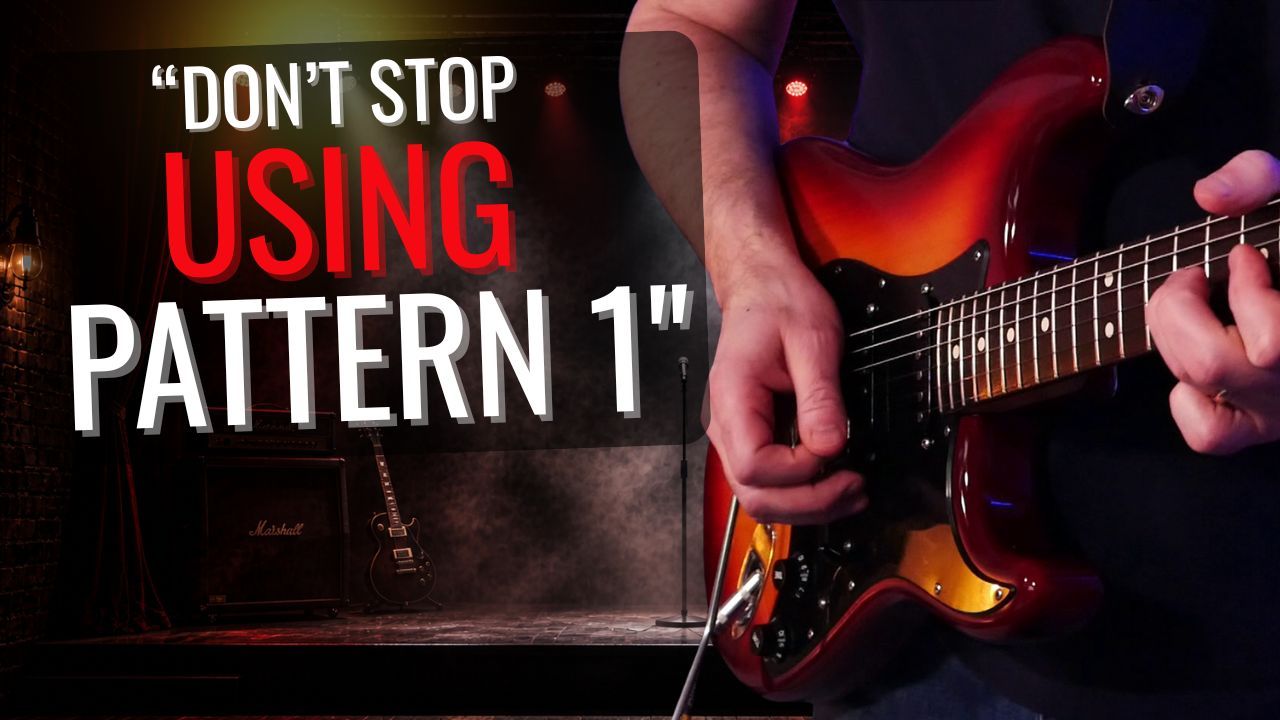
Why Great Blues Players NEVER Outgrow Pattern 1 - P468
Jun 03, 2026Source: Episode transcript provided by user.
Introduction
Most blues guitar players eventually hit a wall with Pattern 1 of the minor pentatonic scale. After years of using it, many players assume the pattern itself is the problem and start searching for more scales, more positions, and more complexity.
In this episode, Lee explains why great blues players never outgrow Pattern 1. The secret is not learning more shapes - it's learning how to hear and use the notes inside the pattern more musically. You'll discover how target notes, chord awareness, tension and release, and phrasing can transform a familiar scale pattern into a powerful improvisational tool.
YouTube Video
[Embed YouTube Video Here]
Podcast Audio
What You'll Learn
- Why Pattern 1 is not holding your blues playing back
- The real reason solos start sounding repetitive
- How great blues players hear target notes inside the pentatonic scale
- The relationship between Pattern 1 and common blues chord shapes
- How tension and release create stronger phrasing
- Why learning chord tones makes solos sound more musical
- How to stop thinking of Pattern 1 as a lick container and start using it as a roadmap
- The most common traps that keep players stuck in "Pattern Prison"
Pattern 1 Is Not The Problem
Every pentatonic pattern contains the same notes. The difference is simply how those notes are arranged across the fretboard. Pattern 1 remains the most popular because it is easy to visualize and immediately sounds musical.
The frustration begins when players start running scales instead of making music. Solos become repetitive, mechanical, and disconnected from the chord progression.
The solution is not abandoning Pattern 1. The solution is understanding how to use the notes more intentionally.
Stop Playing The Entire Scale
One of the fastest ways to improve phrasing is to impose limitations. Instead of playing every note available, focus on specific string groups or note targets.
For example:
- Play only on the top three strings
- Play only on the bottom three strings
- Create licks using a small note set
- Focus on specific target notes inside the pattern
Limitation often produces better musical results than constantly adding more information.
Learning From Great Songwriters
Strong melodies are often simple. What makes them memorable is their relationship to the underlying chords.
Many great melodies use only a few notes, but those notes are carefully chosen to match important chord tones as the harmony changes.
This same principle applies directly to blues improvisation.
The Notes Hidden Inside Pattern 1
Pattern 1 contains:
- Root
- Minor 3rd
- 4th
- 5th
- Flat 7th
Understanding the role of each note is the beginning of musical phrasing.
One of the most important blues sounds comes from the tension between the minor 3rd in the pentatonic scale and the major 3rd found in dominant blues chords. This clash creates the expressive sound that defines blues guitar.
The sooner you begin hearing tension and release instead of scale patterns, the sooner your solos start sounding musical.
Target Notes And Chord Awareness
Pattern 1 sits directly alongside some of the most common blues chord shapes on the guitar.
Because the scale and chord forms overlap, strong notes are already sitting underneath your fingers.
Instead of viewing Pattern 1 as a collection of licks, begin seeing it as a map that connects important chord tones.
When the chord changes, your destination note changes as well. This creates phrases that sound connected to the music instead of disconnected scale exercises.
Pattern 1 As A Musical Roadmap
Many players treat Pattern 1 as a storage container for licks.
A more powerful approach is to use the pattern as a roadmap.
When you know where the roots, thirds, fifths, and sevenths are located, you can guide your phrases toward strong notes that match the current chord.
This creates melodic ideas with clear direction and purpose.
Escaping "Pattern Prison"
Many players become trapped because they rely on:
- The same memorized licks
- One or two familiar scale shapes
- Practicing patterns without musical context
- Playing without listening to chord movement
The goal is not simply learning more information.
The goal is connecting your ears, your hands, and the music happening underneath your solo.
The New Question To Ask
Instead of asking:
"How do I get out of Pattern 1?"
Start asking:
"How do I make Pattern 1 sound more musical?"
Everything needed for expressive blues playing already exists inside this familiar scale shape. The breakthrough comes from understanding phrasing, chord relationships, and note choice.
Practice Assignment
- Play Pattern 1 in your favorite blues key.
- Locate all root notes inside the pattern.
- Identify the chord tones of the I, IV, and V chords.
- Practice ending phrases on notes that match the current chord.
- Create three short licks using only the top three strings.
- Create three short licks using only the bottom three strings.
- Focus on hearing tension and release instead of running the scale.
Continue Your Training
- Play Guitar Academy
- 1-ON-1 Guitar Lessons & Coaching
- Blues Solo Breakthrough
- Play Guitar Academy YouTube Channel
- Play Guitar Podcast on Spotify
- Play Guitar Podcast on Apple Podcasts
- Play Guitar Academy Facebook Group
Related Lessons
- Chord Tone Soloing
- Play More Than Your Basic Blues Solo
- These 3 Things Finally Made Blues Soloing Click For Me
Transcript
Welcome, friends, to the Play Guitar Podcast. I'm Liam. I'm here to help you become the guitar player that you've always wanted to be.
Most blues players eventually reach a point where they're frustrated with Pattern 1. They assume the pattern is holding them back. They start chasing more scales, more boxes, and more complexity. Yet the players they admire continue creating amazing solos from this exact pattern.
Today we're exploring why great blues players never outgrow Pattern 1 and what they're hearing that many players miss.
The problem isn't the pattern. Every pentatonic pattern contains the same notes. The difference is simply how those notes are arranged. Pattern 1 remains popular because it gets you making music quickly.
Eventually, however, many players experience three frustrations. Things start sounding the same. Playing becomes mechanical and scale-based. Learning additional patterns doesn't automatically improve musicality.
The solution is to stop treating the scale as something you must play from beginning to end. Think of it as a collection of notes. You don't have to use every note every time.
One helpful exercise is limiting yourself to only the top three strings or only the bottom three strings. These limitations force you to make musical choices instead of running patterns.
Many players believe Pattern 1 is too basic or that advanced players have moved beyond it. Others assume more information will solve the problem. In reality, focusing more deeply on what you already know often produces better musical results.
Great melodies are usually simple. What makes them effective is how they connect to the chords underneath. This same idea applies directly to blues soloing.
Pattern 1 contains the root, minor 3rd, 4th, 5th, and flat 7th. Understanding the role of each note helps transform scales into music.
The famous blues sound comes from the tension between the minor 3rd in the scale and the major 3rd found in dominant blues chords. Learning to hear that tension and release is a major step toward expressive playing.
Great players focus on target notes. The most common bar chord shapes overlap directly with Pattern 1. The strongest notes are already sitting underneath your fingers.
Rather than seeing Pattern 1 as a place where your licks live, begin seeing it as a map. The pattern helps connect strong notes that match the current chord.
As chords change, your target notes change. This creates melodies that sound connected to the harmony instead of sounding like scale exercises.
Many players become trapped by memorized licks, limited pattern knowledge, and practicing without musical context. The goal isn't simply learning more information. The goal is connecting your ears, your hands, and the harmony happening underneath your solo.
Stop asking how to leave Pattern 1. Start asking how to make Pattern 1 sound more musical.
The best blues players never escape Pattern 1. They transform it through phrasing, target notes, chord awareness, and musical understanding.
Today we looked at why Pattern 1 isn't the limitation many players think it is. The breakthrough comes when you stop collecting information and start creating music from what you already know.
In this week's lesson, I demonstrate three practical ways to make Pattern 1 sound exceptional using three different licks that you can immediately apply to your own playing.
If you'd like help developing more expressive phrasing and understanding how to make simple patterns sound musical, check out the Blues Elevation Toolkit at Play Guitar Academy.
Thanks for listening, and I'll see you next week.
Transcript source: :contentReference[oaicite:0]{index=0}