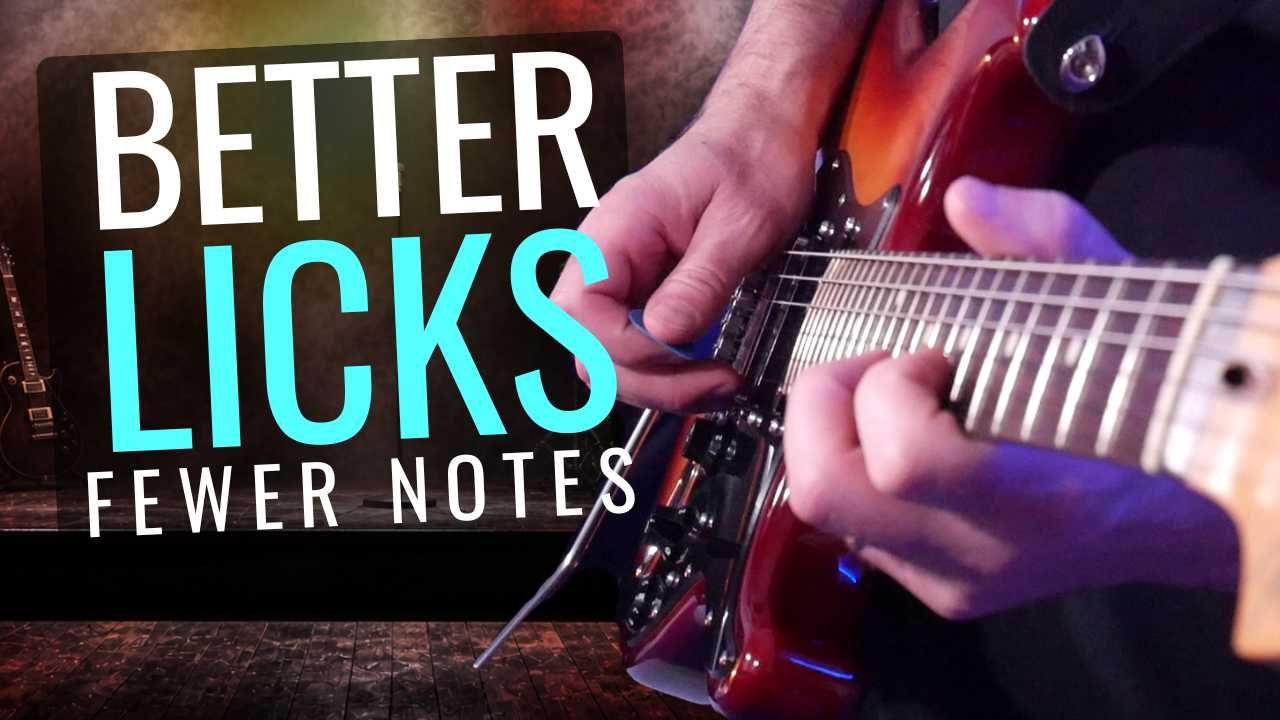
3 Blues LICKS That Sound BETTER With Fewer Notes - Y107
Jun 17, 2026Many blues players believe that better solos come from learning more scales, playing faster, and fitting more notes into every phrase. The truth is often the opposite.
In this lesson, Lee demonstrates three blues licks that become stronger, clearer, and more expressive when unnecessary notes are removed and important chord tones are targeted instead.
By focusing on the notes that carry the most weight, you'll learn how to make your blues solos sound more musical without playing more.
YouTube
What You'll Learn
- Why fewer notes often create stronger blues phrasing
- How to target root notes, thirds, and sevenths for better solos
- The difference between scale-based playing and chord-tone targeting
- How dominant 7th chord tones shape blues vocabulary
- Why major and minor pentatonic sounds work together in blues
- How to make each note sound more intentional
- Ways to create stronger tension and resolution in your licks
Lick 1 - Targeting the Notes That Define the Chord
The first lick begins as a typical E minor pentatonic phrase filled with triplets, sixteenth notes, bends, and scale movement. While it sounds fine, most of the phrase relies on the scale pattern itself rather than emphasizing the chord underneath.
The revised version targets the notes that define the E7 chord: E, G#, B, and D. By aiming for the root, flat seventh, and major third, the phrase immediately sounds more connected to the harmony.
Instead of playing more notes, the lick focuses on making each note count.
Lick 2 - Adding Major Pentatonic Sounds
The second example begins with a familiar sequence-based blues lick over the A chord. The original phrase uses minor pentatonic ideas and resolves to the root note.
The improved version introduces notes from the major pentatonic scale while continuing to target important chord tones. The sixth resolves into the root, the minor third moves into the major third, and the flat seventh is highlighted with a bend.
This combination of major and minor sounds creates one of the most recognizable sounds in blues guitar.
Lick 3 - Moving Beyond Scale Patterns
The final lick demonstrates how easy it is to fall into running scale patterns during a turnaround. The original phrase moves rapidly through the E minor pentatonic scale with several repeated notes before resolving.
The targeted version begins similarly but quickly shifts toward chord tones. The phrase emphasizes the fifth, moves from the minor third to the major third, and highlights the flat seventh before returning to a strong resolution.
The result sounds less like a scale exercise and more like a musical statement.
The Power of Chord Tone Targeting
Throughout all three examples, the lesson remains the same: listeners respond to important notes.
Root notes, thirds, fifths, and sevenths create a stronger connection to the chord progression than simply moving through scale shapes. Learning to identify and target these notes allows your solos to sound more expressive without requiring additional speed or complexity.
When you understand which notes carry the most weight, every phrase becomes more intentional.
Practice Assignment
- Choose one blues backing track in E.
- Play your normal pentatonic licks over the progression.
- Identify the root, third, fifth, and flat seventh of each dominant chord.
- Create a second version of each lick using fewer notes.
- Target at least one important chord tone in every phrase.
- Experiment with moving between the minor third and major third.
- Compare the original lick and the targeted version to hear the difference.
Continue Your Training
- Play Guitar Academy
- 1-ON-1 Guitar Lessons & Coaching
- Blues Solo Breakthrough
- Play Guitar Academy YouTube Channel
- Play Guitar Podcast on Spotify
- Play Guitar Podcast on Apple Podcasts
- Play Guitar Academy on Instagram
- Play Guitar Academy on Facebook
- Play Guitar Academy Facebook Group
Related Lessons
- Why Targeting Chord Notes Makes Blues Solos Work
- 5 Licks to Target the Right Notes in Your Blues Solos
- Why One Note Will Make Your Solos Sound Connected
- Why Great Blues Players Never Outgrow Pattern 1
- 3 Slow Blues Licks That Make Every Note Sound Bigger
Transcript
Hey players, it's Lee from Play Guitar Academy.
One of the biggest mistakes that blues players make is they believe they need to play a lot of notes to sound really good. The reality is that great blues players use fewer notes a lot of the time, and they'll use more space.
Today, I'm going to show you three blues licks that actually sound better when you remove notes and target some of the important notes of the chord you're playing over.
All three examples do this in different ways. The first version of each lick uses a typical minor pentatonic approach with lots of notes. The second version uses fewer notes and more targeting, making every note more meaningful.
The first lick begins with a triplet on top of pattern one of the E minor pentatonic scale, followed by sixteenth notes and eighth notes.
That lick works well. It comes directly from the minor pentatonic scale, includes expressive bends, and resolves to the root note.
But when we start paying attention to the E7 chord underneath, things become more interesting. In most blues progressions, we're dealing with dominant seventh chords. An E7 chord contains E, G#, B, and D.
In the targeted version, we begin by targeting the root note immediately. Then we bend into it from below, emphasizing it again. Next, we target the flat seventh and finally move from the minor third to the major third.
The result uses fewer notes, but every note clearly outlines the chord.
The second lick begins over the A chord using a sequence-based pentatonic phrase that resolves to the root.
The revised version introduces major pentatonic sounds. A sixth resolves into the root, the minor third moves into the major third, and the flat seventh is highlighted through a bend.
This creates a more expressive sound while maintaining a strong connection to the chord progression.
The third lick begins over the B7 chord during the turnaround. The original version runs through the E minor pentatonic scale using repeated notes and descending patterns.
The improved version starts similarly but quickly shifts toward important chord tones. It emphasizes the fifth, moves between the minor and major third, targets the flat seventh, and finishes with a strong resolution.
The phrase sounds less like a scale pattern and more like a musical statement.
Most players chase more complexity and more notes. Great players learn to identify the notes that carry the most weight.
If you're interested in learning more about this approach, check out the Blues Elevation Toolkit. The link is in the description.
I'll see you next week. Bye-bye.